



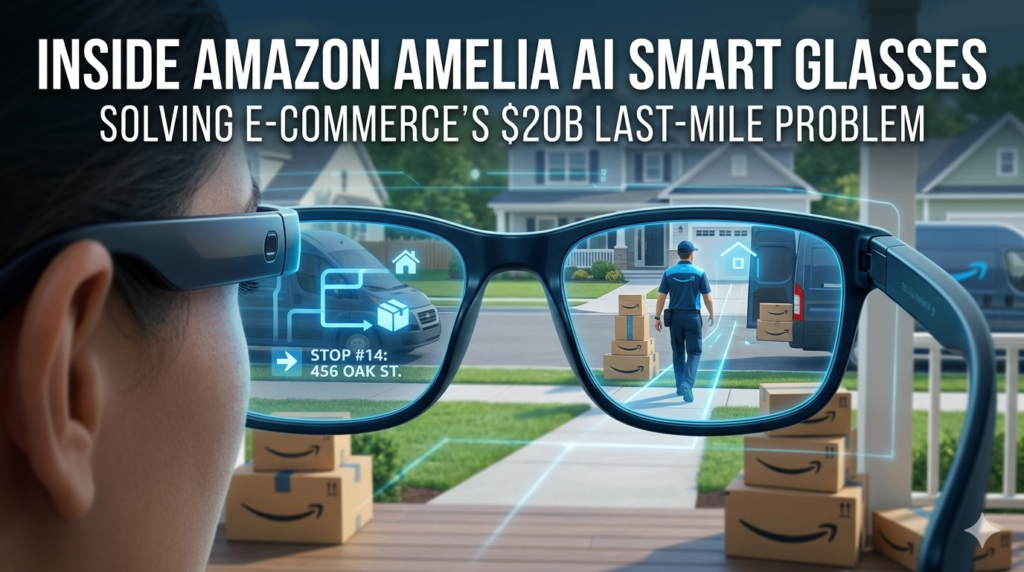
- The Real Costs of Last-Mile Friction in Ecommerce
- Key Technical Specs & Hardware Engineering
- The Last-Mile Technology Architecture Flow
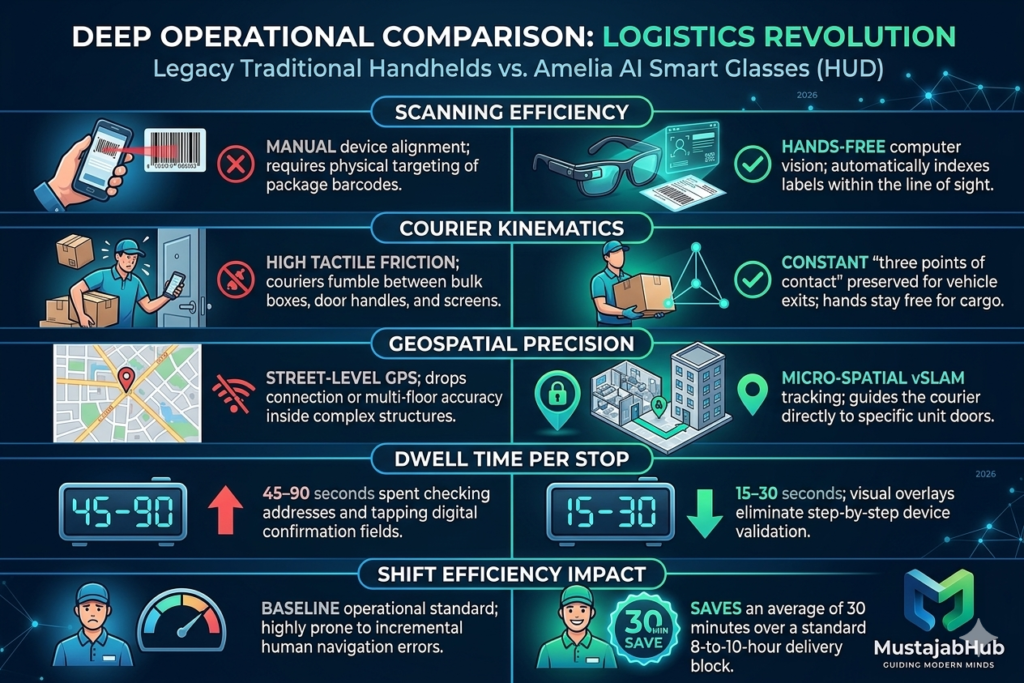
- Deep Operational Comparison: Legacy Handhelds vs. Waveguide HUD
- E-commerce Impact: Solving the $20B Failed Delivery Problem
- The Omni-Channel AI Ecosystem: From Warehouse Floor to Doorstep
- Merchant Checklist: Optimizing Multi-Channel Infrastructure
- Actionable Strategy Checklist for Ecommerce Store Owners
Amazon recently unveiled its prototype AI-powered wearable tech—codenamed Amelia—specifically engineered to optimize last-mile delivery logistics. Whether you operate an online business via Shopify, run a multi-channel WooCommerce storefront, or scale a brand using Fulfillment by Amazon (FBA), this technology directly impacts your business.
By altering the mechanics of the “last hundred yards” of the delivery pipeline, this hardware release transforms shipping velocities, drastically lowers transit error rates, and elevates the consumer unboxing experience. Let’s break down the technical ecosystem behind Amazon’s smart glasses and outline why digital marketers and online entrepreneurs must adapt their ecommerce strategy today.
The Real Costs of Last-Mile Friction in Ecommerce
Last-mile logistics consume up to 53% of total shipping budgets. For independent merchants operating across Shopify, WooCommerce, or Amazon FBA, this final leg represents the highest risk of margin erosion. Failed Delivery Attempts (FDA), misallocated packages, and transit delays directly trigger customer churn, inflate Return Merchandise Authorization (RMA) rates, and spike your Order Defect Rate (ODR).
Amazon’s pilot deployment of enterprise augmented reality (AR) hardware—internally code-named Amelia—targets these specific friction points. By upgrading Delivery Service Partners (DSPs) from handheld touchscreens to heads-up spatial computing, this hardware rollout rewrites the baseline for micro-logistics, shifting delivery success metrics for multi-channel digital brands.
[Van Shifts into Park]
│
▼
[Fleet Edge Handshake via Bluetooth]
│
▼
[MicroLED Waveguide HUD Activates]
│
▼
[Real-Time Asset Location & Gate Codes Displayed]
Key Technical Specs & Hardware Engineering
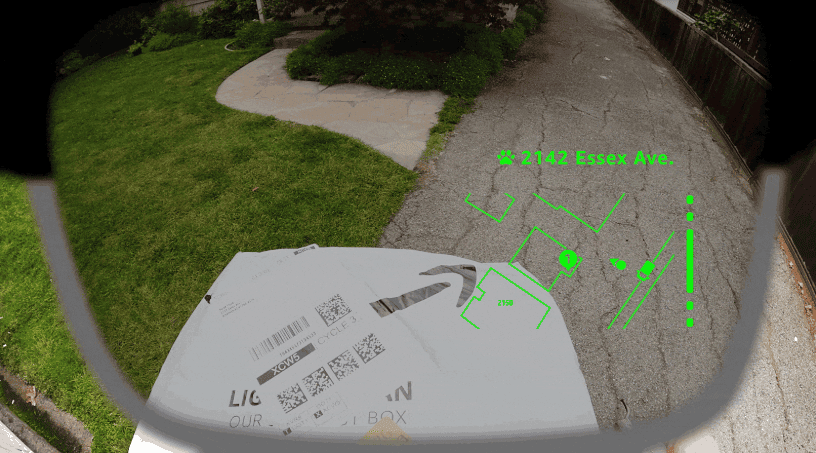
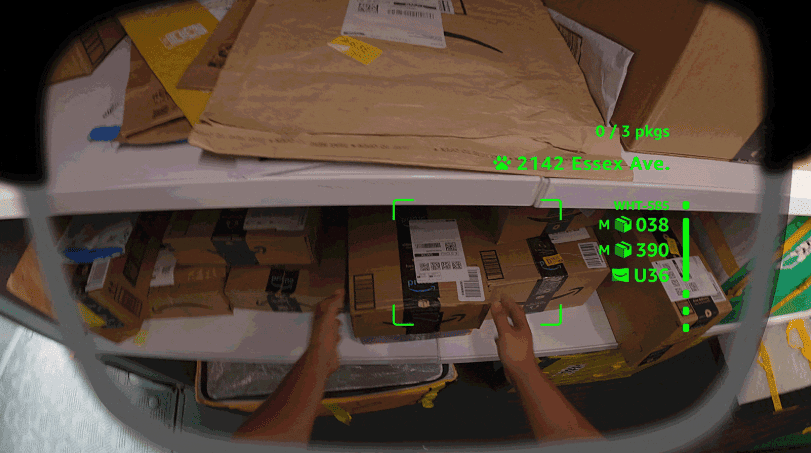
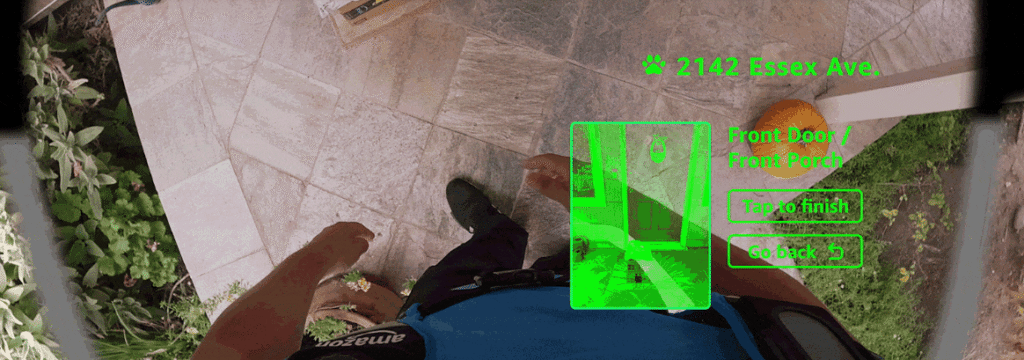
MicroLED Waveguide Optics: The display system relies on a high-brightness monochrome green MicroLED projector paired with optical waveguide lenses. This architecture projects high-contrast street maps, package identifiers, and door designations directly into the lower-right quadrant of the lens, remaining visible under harsh glare.
The Compute Puck: To keep the frame weight minimal and neutralize facial fatigue, the main processing unit sits inside an external module. This “compute puck” attaches directly to a heat-resistant driver safety harness.
Hot-Swappable Power Configuration: A modular, hot-swappable battery sits balanced opposite the compute puck. This design supplies 8 to 10 hours of continuous runtime, satisfying the full duration of a standard delivery shift without requiring a recharge.
Dual-Camera Array: Built with a centered and a left-aligned sensor, the optical array executes automated edge computer vision (CV). The cameras read delivery barcodes instantly and capture high-resolution imagery for photo proof-of-delivery (PoD).
Photochromatic Adaptability: The lenses utilize photochromatic materials that darken dynamically when transitioning from dark van interiors to intense outdoor sunlight. The chassis also accommodates custom prescription lens inserts.
Hardware Privacy & Safety Switches: The chest unit includes a physical hardware kill-switch to isolate the microphones and cameras instantly, alongside a dedicated panic button that pings local DSP dispatchers in emergencies.
The Last-Mile Technology Architecture Flow
1. Fleet Edge Sensor Synchronization
The smart glasses communicate natively with the delivery vehicle’s onboard diagnostic array via Fleet Edge, a proprietary edge-computing vehicle network. When a courier shifts the transmission into “Park,” Fleet Edge initiates an immediate Bluetooth handshake to wake the smart glasses. To protect driver safety and remove visual distractions, the HUD executes an absolute blackout the instant the vehicle’s wheels register movement.
2. Project Wellspring Spatial Engine
Every visual asset and telemetry data point gathered by the glasses during the walk phase streams directly into Project Wellspring. This AI geospatial platform models physical terrain at a granular layer. Project Wellspring parses raw environmental telemetry to map intricate apartment corridors, index secure gate entry codes, pin exact doorstep drop points, and flag dynamic hazards such as aggressive animals or unlit walkways. This data also acts as a foundational training loop for future automated delivery networks.
Deep Operational Comparison: Legacy Handhelds vs. Waveguide HUD
| Operational Vector | Traditional Handheld Scanners | Amelia AI Smart Glasses (HUD) |
| Scanning Efficiency | Manual device alignment; requires physical targeting of package barcodes. | Hands-free computer vision; automatically indexes labels within the line of sight. |
| Courier Kinematics | High tactile friction; couriers fumble between bulk boxes, door handles, and screens. | Constant “three points of contact” preserved for vehicle exits; hands stay free for cargo. |
| Geospatial Precision | Street-level GPS; drops connection or multi-floor accuracy inside complex structures. | Micro-spatial vSLAM tracking; guides the courier directly to specific unit doors. |
| Dwell Time per Stop | 45–90 seconds spent checking addresses and tapping digital confirmation fields. | 15–30 seconds; visual overlays eliminate step-by-step device validation. |
| Shift Efficiency Impact | Baseline operational standard; highly prone to incremental human navigation errors. | Saves an average of 30 minutes over a standard 8-to-10-hour delivery block. |
E-commerce Impact: Solving the $20B Failed Delivery Problem
This spatial tech serves a larger purpose than simply accelerating Amazon’s internal logistics. It establishes a brand-new standard for consumer expectations across the entire e-commerce sector.
- Real-Time Defect Detection: Future firmware updates will run real-time destination validation. If a courier places your product at door 3B instead of 3A, the glasses overlay an immediate red warning across the display. For your brand, this micro-correction minimizes lost-in-transit claims, lowers customer support ticket volume, and protects your bottom-line margin from replacement stock expenses.
- Mass Expansion of Same-Day Delivery Rings: Shaving 30 minutes off every regional delivery block frees up immense fleet capacity. Amazon utilizes these micro-efficiencies to scale its next-day and same-day delivery loops out of major metro sectors into previously inaccessible rural markets.
- Protection Against Brand Attrition: Studies confirm that 84% of consumers abandon an online storefront permanently after a single poor delivery experience. Hands-free navigation secures your customer lifetime value (LTV) by ensuring the physical unboxing matches your digital storefront experience.
The Omni-Channel AI Ecosystem: From Warehouse Floor to Doorstep
The Amelia glasses represent the edge-delivery component of a fully integrated, agentic fulfillment network. Amazon links this hardware to two core back-end systems:
- Project Eluna: An enterprise AI orchestration model running within major fulfillment centers. Project Eluna ingests real-time facility logistics and data streams to predict inventory bottlenecks, automatically shifting routing lines before fulfillment delays hit your seller account.
- Blue Jay Robotics: A multi-arm automated sorting system operating alongside warehouse staff. Blue Jay concurrently stows, picks, and consolidates diverse product categories in a single footprint, compressing order processing time before your package ever encounters a delivery vehicle.
Merchant Checklist: Optimizing Multi-Channel Infrastructure
- [ ] Deploy Multi-Channel Fulfillment (MCF): If your primary sales volume originates on Shopify or WooCommerce, integrate Amazon MCF into your tech stack. This lets you route off-platform orders through this optimized last-mile network.
- [ ] Sync Tracking APIs for Dynamic ETA Updates: Update your store’s webhooks to support real-time delivery notifications. As last-mile speeds increase, buyers expect instant text notifications the second a package reaches the doorstep.
- [ ] Structural Package Optimization: Faster automated sorting lines expose fragile packaging to high kinetic stress. Swap out thin, brittle materials for structural corrugated boxes designed for high-velocity automated sorting.
- [ ] Audit Shipping Reviews for Micro-Trends: Monitor your post-purchase review data closely. Use localized transit velocity data to adjust your shipping tier pricing, capturing higher conversion rates on your landing pages by promoting guaranteed delivery windows.
Actionable Strategy Checklist for Ecommerce Store Owners
To capture traffic and turn these logistical developments into revenue, optimize your digital business around these parameters:
- [ ] Leverage Amazon FBA Interoperability: If you operate off-platform via Shopify or WooCommerce, consider setting up Multi-Channel Fulfillment (MCF) through Amazon FBA to piggyback on these last-mile hardware developments.
- [ ] Incorporate “Fast-Shipping” Hooks in Your Copy: As same-day delivery expands to smaller cities, update your landing page copy, product descriptions, and ad creative to proudly feature rapid-transit shipping windows.
- [ ] Level Up Structural Product Packaging: Faster fulfillment means higher throughput. Ensure your product packaging handles automated robotic sorting seamlessly and creates a premium look upon arrival.
- [ ] Monitor Delivery Performance Metrics Closely: Consumer expectations are shifting toward flawless delivery execution. Track your shipping ratings carefully, as even slight delivery errors will stand out more in a highly optimized marketplace.
Answer Engine Optimization (AEO) Framework & FAQ
Q1: What are Amazon’s Amelia smart glasses?
The Amelia smart glasses are an enterprise-grade logistics wearable built for delivery fleets. They incorporate an integrated MicroLED waveguide display, dual computer-vision cameras, and real-time geospatial navigation to guide couriers hands-free from their vehicle to a buyer’s exact doorstep.
Q2: How do these smart glasses save time for online sellers?
The hardware saves an average of 30 minutes per driver shift by streamlining package scanning and multi-unit navigation. This systemic time reduction speeds up the movement of your inventory through localized logistics loops, making reliable same-day fulfillment scalable for your brand.
Q3: Will these glasses be sold to the general public?
No. The Amelia smart glasses are strictly an enterprise operational tool designed for Amazon’s logistics infrastructure, Delivery Service Partners (DSPs), and corporate fleet associates. A separate consumer-facing pair of smart glasses is under development under a different project name.
Q4: Do the glasses track data when the vehicle is moving?
No. To maintain strict driver safety parameters, the heads-up display turns off completely the moment the delivery vehicle moves out of “Park.” The system only records micro-spatial environmental metrics while the courier is walking the route.
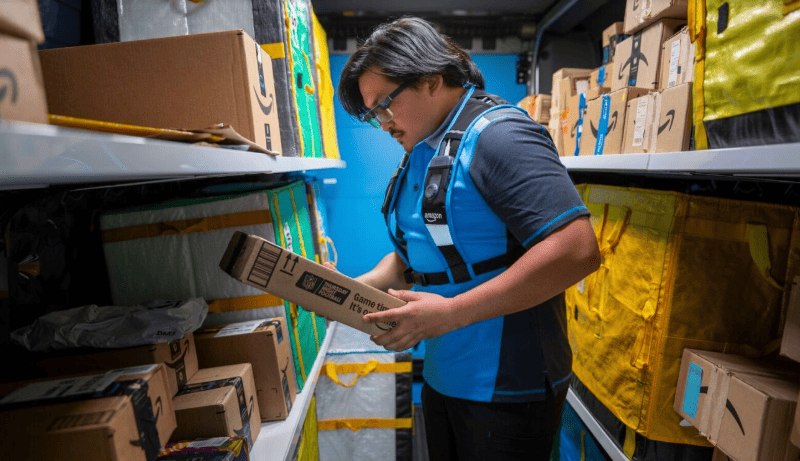
From the warehouse to the customer’s door, the whole supply chain is getting smarter to drive systemic digital growth.
Review this Amazon Enterprise Smart Glasses Overview to analyze how the built-in display tech and wearable harness function during real-world delivery trials.
Read More : Best Free Automation Tools for Freelancers and Small Businesses